
Southeast Asia is the fastest-moving region for coloured contact lenses, and the reason is not manufacturing — it is distribution. In most of these markets the category is discovered on a phone, compared on a marketplace listing, and bought without ever being seen in a shop. That changes what a range has to prove before it launches.
Why the channel moved first
Coloured lenses are a visual-first category. A buyer decides with their eyes, and a marketplace listing with studio photography, short video and review volume does the job that a shop counter used to do. Marketplace and social commerce platforms — Shopee, Lazada, TikTok Shop — now carry a meaningful share of the category in Indonesia, Thailand, Vietnam, the Philippines and Malaysia, and the listing itself has become the point of sale.
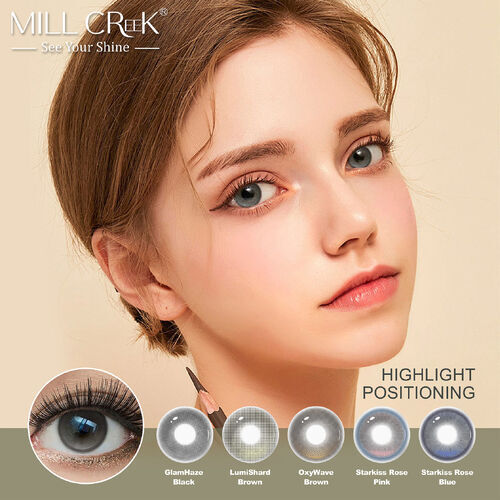
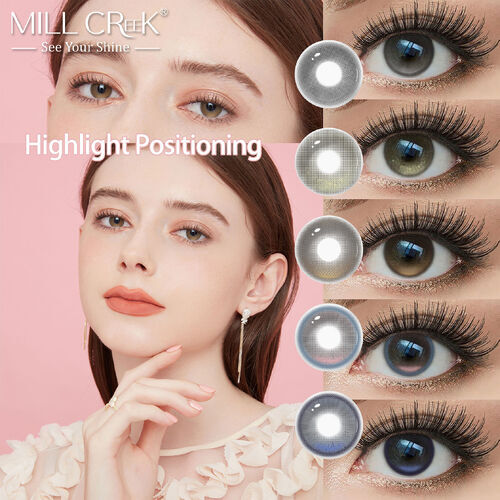
For a brand owner this has two consequences. First, the range has to be legible at thumbnail size: colour family, diameter and effect need to be obvious from the first image. Second, stock depth matters more than range breadth — a listing that goes out of stock loses its ranking, and ranking is the whole channel.
What differs by market
The commercial channel is regional; the regulatory pathway is not. In most ASEAN markets a contact lens is a medical device, and registration is held by a locally licensed entity — a distributor, an importer, or a local subsidiary. That single fact decides the launch sequence more than price does.
| Market | Channel pattern | What decides the launch |
|---|---|---|
| Indonesia | Marketplace-led, high mobile share | Local registration holder and Indonesian-language labelling |
| Thailand | Marketplace plus pharmacy and optical chains | Import licence held locally; Thai labelling |
| Vietnam | Social commerce first, marketplace second | Local registrant and customs classification |
| Philippines | Marketplace plus reseller networks | Local licence holder; English labelling usually accepted |
| Malaysia | Marketplace plus optical retail | Device registration before listing; Bahasa labelling |
The table is a starting point, not a checklist. Requirements are set per market and change; confirm the current pathway with the local registrant before committing a production run.
What a range actually needs
A launch range for these channels is usually narrower than a catalogue. Three colour families cover most demand — a natural brown or grey, a subtle enhancement tone, and one high-contrast effect shade for the social segment. Within each family, two graphic diameters are enough to cover the “natural” and “defined” looks.
- Depth over breadth. Six SKUs held in stock outsell eighteen SKUs alternating in and out.
- Photography before packaging. The listing image is the product; commission it before the carton.
- One power range, stated clearly. Plano plus a defined minus range; buyers check this first.
The documentation question most launches get wrong
Who holds the registration is a commercial decision with a technical consequence. If the local distributor holds it, the brand owner does not control the dossier, and switching distributor means starting the registration again. If a local subsidiary holds it, launch is slower but the asset stays with the brand.
Two documents decide how quickly a listing can go live: the registration certificate naming the product and the manufacturer, and the label artwork in the required language. Both have to match the product actually shipped. A model number that differs between the certificate and the carton is the most common reason a shipment sits in customs.
Three checks before committing a run
- Confirm the registrant. Name the legal entity that will hold the registration, and check the certificate covers the exact model and manufacturer.
- Match label to certificate. Language, model designation and manufacturer address must be identical across artwork, certificate and shipping documents.
- Size the first run to the channel, not the factory. Marketplaces reward continuity of stock; a first order sized to shelf turnover will run out before the listing matures.
The regional opportunity is real, but it is won on documentation and stock discipline rather than on design. The brands that scale in these channels are the ones that treated registration as a launch prerequisite rather than an afterthought.
FAQ
Why does the channel matter more than the price in Southeast Asia? The category is discovered and compared on marketplaces and social commerce, so listing quality and stock continuity drive sales more than a marginal difference in unit price.
Can one registration cover several ASEAN markets? No. Registration is held per market by a locally licensed entity, so the launch sequence follows the registrant rather than the price list.
What holds a shipment at customs most often? A mismatch between the certificate and the carton: the model designation, the manufacturer address, or the label language.